As a researcher involved in the Southern Responses to Displacement project since 2020, I have had the unique opportunity to conduct around 70 interviews with refugees from Syria, local community members, and service providers, as well as helping to run participatory and writing workshops in both 2022 and 2025. Over the course of this project, which has been examining responses developed by states, municipalities and members of local communities (including refugees themselves) to the needs and rights of people displaced from Syria, I have posed the same, project-based interview questions to the members of different Syrian communities in various locations, including Hatay, Gaziantep, and Istanbul. Our most recent workshops in Istanbul and Gaziantep took place just weeks after the fall of the Syrian regime in December 2024. This monumental change brought a sense of relief and happiness to Syrians everywhere. However, this shift also comes with deep uncertainty. Syrians in Turkey, as elsewhere in displacement, find themselves confronting a complex future—torn between the hope of returning to a post-regime Syria and the struggle to continuing building a life in their host country. While this political change is a source of joy, it does not erase the weight of the difficult decisions they now face.
While many states across the global North paused or announced the cessation of processing Syrian asylum-seekers’ claims as early as the day after the fall of the regime (ie on the UK see here and on European states, see here), the UNHCR has asserted that refugees from Syria are still eligible for refugee status and must not be forced to return: “refugees must be able to make informed decisions” and returns must be voluntary and made “without any pressure.” In this blogpost, I explore the complex layers of the decision-making process among Syrians based in Turkey – the country hosting the largest number of Syrian refugees worldwide, being home to over 3 million Syrians -, examining their evolving sense of agency in this shifting context. This includes recognising the ways that different responses by states, humanitarian organisations and members of local communities may relate to Syrian people’s decision-making processes and refugees’ own responses to this new phase of displacement.
Revisiting the Syrian Experience: Agency, (non-)Return, and the Future
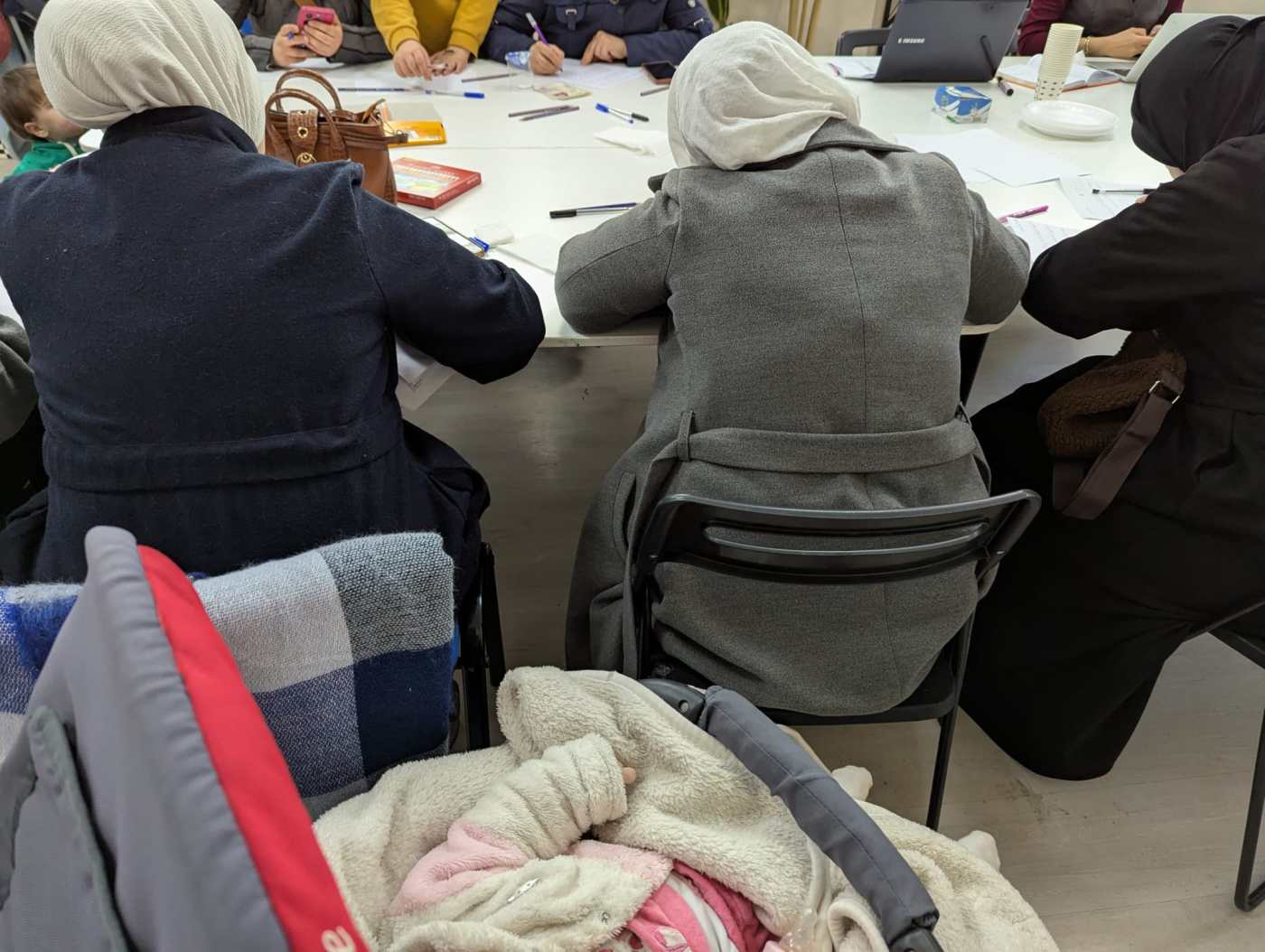
During a workshop in Istanbul, a Syrian woman arrived a few minutes early. As we briefly explained that the focus of the workshop was to map Southern service providers in Istanbul, her immediate reaction was clear: “If you’re inviting us here to talk about voluntary return, we don’t want to return to Syria.”
This reaction echoed a prominent theme that emerged among the Syrian women present in the workshop: the issue of return to Syria is deeply emotional and politically charged. It is not just about practical considerations; it is about people’s identity, choice, and control over their lives.
The theme of (non-)return resonated strongly with the Syrian women, many of whom expressed a powerful reluctance to even consider returning to Syria. Regardless of the various forces that affect Syrian refugees’ decisions and perspectives about Turkey (or other host countries), the political shift in Syria—marked by the fall of the regime on December 8, 2024—has significantly altered Syrians’ sense of agency and their self-identification as refugees. For many, this political change has given them a new sense of autonomy that they didn’t feel they had before.
While the fear and oppression tied to the regime’s hold have collapsed in reality, its trauma will linger for years. Thus, the decision of whether to return to Syria remains deeply personal, shaped by individual circumstances, preferences, and life experiences.
Personally, I can relate to this transformation. Although I, like many Syrians, was offered Turkish citizenship—which technically freed me from identifying as a refugee—the reality is that Syrians, myself included, are still treated as refugees in everyday life, whether on the streets, in hospitals, or at state institutions. The shift after the fall of the regime, however, has allowed Syrians to reclaim some degree of agency that transcends their legal status or documentation. It is no longer solely about having been displaced from Syria by force; it is about the freedom to choose how and when to move forward with our lives. In essence, the collapse of the regime has given many Syrians, regardless of their status, a renewed sense of control over their futures.
Return: A Shift in Perspective
The unexpected collapse of the Syria regime over just a few days, after 14 years of struggle, has sparked the current debate. Return has theoretically always been discussed, but never in practice. For many Syrians, this has made life more complicated, as the once-impossible idea of returning to Syria has now become a reality. For years, Syrians never imagined they would have a choice about their return. But with the fall of the regime in December 2024, this shift has opened a Pandora’s box of questions about return: Where? How? When?
Before this political shift, Syrians in Turkey were largely stuck. Moving anywhere else—whether within the region or beyond—was nearly impossible due to migration restrictions, visa denials from countries like Lebanon, Jordan, and Egypt, and the practicalities of border control. The inability to choose one’s destination made Turkey the default safe-haven, even though it was neither the ideal nor the permanent choice.
Now, with the possibility of returning to Syria—whether immediately or in the future—the question has changed. Syrians must face what’s next. For many, this is no longer a theoretical question but a real one: What does return look like now? Is it feasible? Is it desirable? Is it affordable? For those not ready to return, there remains a choice: stay in Turkey, move elsewhere, or navigate the complex political and social terrain of ongoing displacement, in a context where service provision and legal rights may change across the board. Indeed, Syrians in Turkey have long faced challenges such as poor living conditions, problems in access to public services, precarious temporary status and highly selective integration policies (Kayaoglu et al, 2021). Such challenges may become even greater as the host state itself responds to the regime change in Syria. At the same time, it is important to recall that people’s decisions to return or remain may also be framed by the Turkish authorities’ arbitrary used of deportations (aka. “forced returns”) to punish refugees lacking the right papers.
The Gained Syria vs. The Blurred Future
The fall of the regime has allowed many Syrians to, in a sense, regain Syria as their home after years of oppression. Celebrations filled cities across Syria and the diaspora, for days, weeks, and even months (see here). However, while Syrians have reclaimed their land, their future remains clouded with uncertainty. The political landscape in Syria under the new caregiver government and the unpredictable security situation with poor infrastructure cast a long shadow over any potential for near return.
In Turkey, a similar sense of uncertainty persists. Syrians—whether refugees or not—still face an unclear future. There are pressing questions about the availability of services for those who remain, as well as concerns about the evolving public attitude in Turkey towards Syrians. While many Turkish citizens have expressed joy over Syria’s changing political situation and even apologised for not fully understanding the extent of the Syrian tragedy (as some of our Turkish interlocutors expressed during our workshops in Istanbul and Gaziantep), the critical question remains: How long will this goodwill last?
Moreover, Syrians in Turkey rely on services (nationally- and municipally-provided as well as those provided by international agencies and organisations) that may be at risk. With shrinking funding from donors and shifting political dynamics, including a move by some donors and organizations to relocate their operations from neighbouring countries to Syria itself, will Syrians continue to receive the services they currently depend on, even though these are already insufficient? Perhaps more concerning is how Syrians will be perceived both by the state and by members of Turkish civil society, once the Syrian “victory” fades from media headlines. Will they remain a topic of discussion in the news, or will the focus shift, leaving Syrians vulnerable to changing tides of public sentiment, racism, and hate speech?
This uncertainty permeates the lives of Syrians everywhere. Personally, I left Syria 12 years ago at the age of 25. I was young, single, and ready to settle wherever my journey took me. Today, at a much older age, with three children, the stakes have changed. My decisions are no longer just about me—they now affect my entire family. The choices I face are more complex, and once again, they are rooted in an ongoing uncertainty about the future, which has always been a part of our existence as Syrians.

 Southern Responses to Displacement
Leave a comment