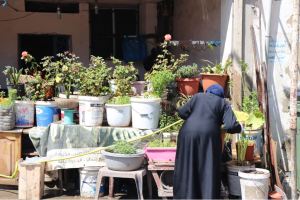
Turkey hosts the highest number of people forcibly displaced from Syria and local municipalities can struggle to meet their basic needs, leaving much-needed integration programs de-prioritised. A lack of data concerning the numbers of refugees in specific areas, and a lack of additional funding or local staff, are clear barriers to implementation, even where policies... Continue Reading →
Thinking Power Relations across Humanitarian Geographies: Southism as a Mode of Analysis
This piece is posted as part of the blog series, Thinking through the Global South. You can read the series here. In this blog post Dr Estella Carpi examines the impact of the structural relationships between the Global North and Global South and puts forward the concept of ‘Southism’. This term is used to describe... Continue Reading →
Queering South-South Cooperation and Humanitarianism
In this podcast, Dr Emma Mawdsley discusses how to move away from an imperialist politics of international development by questioning western-derived approaches to theory and practice. In her ground-breaking talk, Mawdsley proposes the metaphoric idea of 'queering' South-South cooperation and humanitarianism, which are generally thought of and designed as frameworks that are penetrated by the... Continue Reading →
Handbook of South-South Relations – Table of Contents
The Southern Responses to Displacement from Syria team is pleased to announce that the Handbook of South-South Relations (edited by Southern Responses PI, Prof. Elena Fiddian-Qasmiyeh, and Prof. Patricia Daley) will be published on 18 December 2018. The Handbook includes chapters by Prof Elena Fiddian-Qasmiyeh and Dr. Estella Carpi (Southern Responses Post-Doctoral Research Associate), and... Continue Reading →
‘Southern’ and ‘Northern’ assistance provision beyond the grand narratives: Views from Lebanese and Syrian providers in Lebanon
In this piece, Southern Responses’ Research Associate Dr Estella Carpi reflects on diverse meanings and understandings of the terms ‘the global South’ and ‘the global North,’ focusing in particular on the ways that these terms and the modes of response that are often associated with the ‘South’ and ‘North’ are conceptualised by Lebanese and Syrian aid providers in Lebanon.